No Driveways, No Shops, No HOA: The Design Logic Behind a Lower Hermosa Morning
August 20, 2026
August 20, 2026
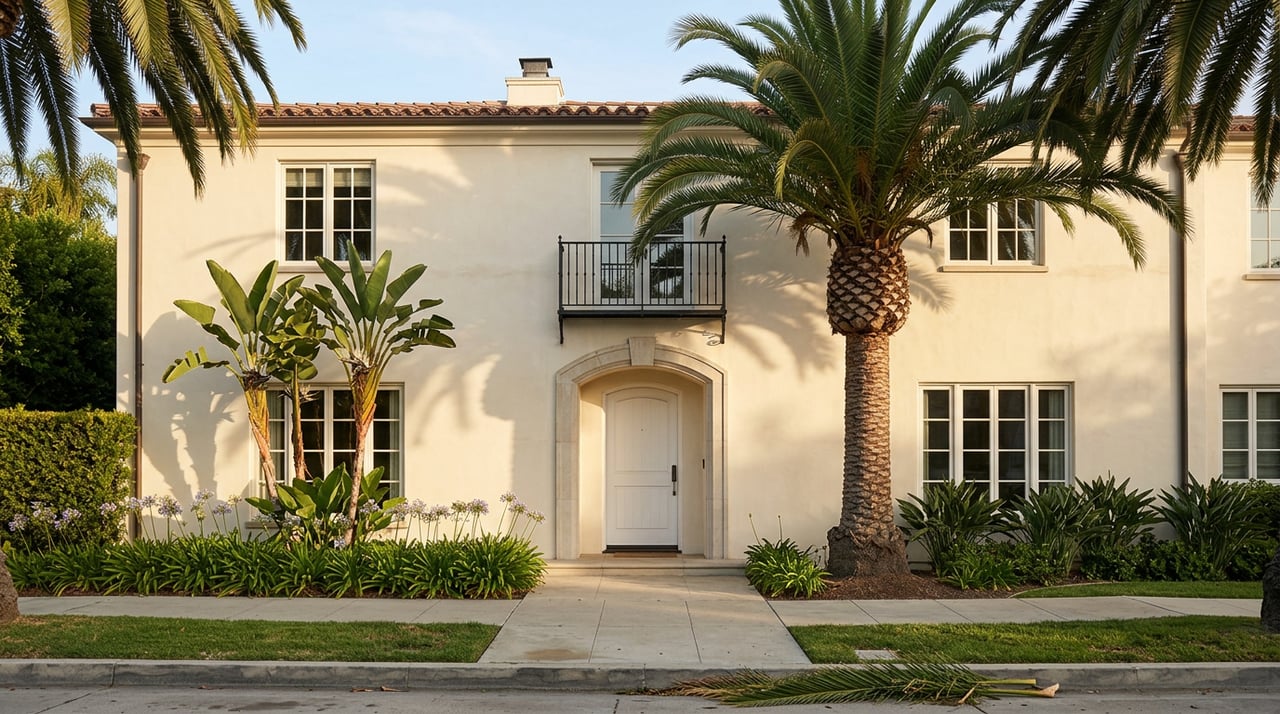
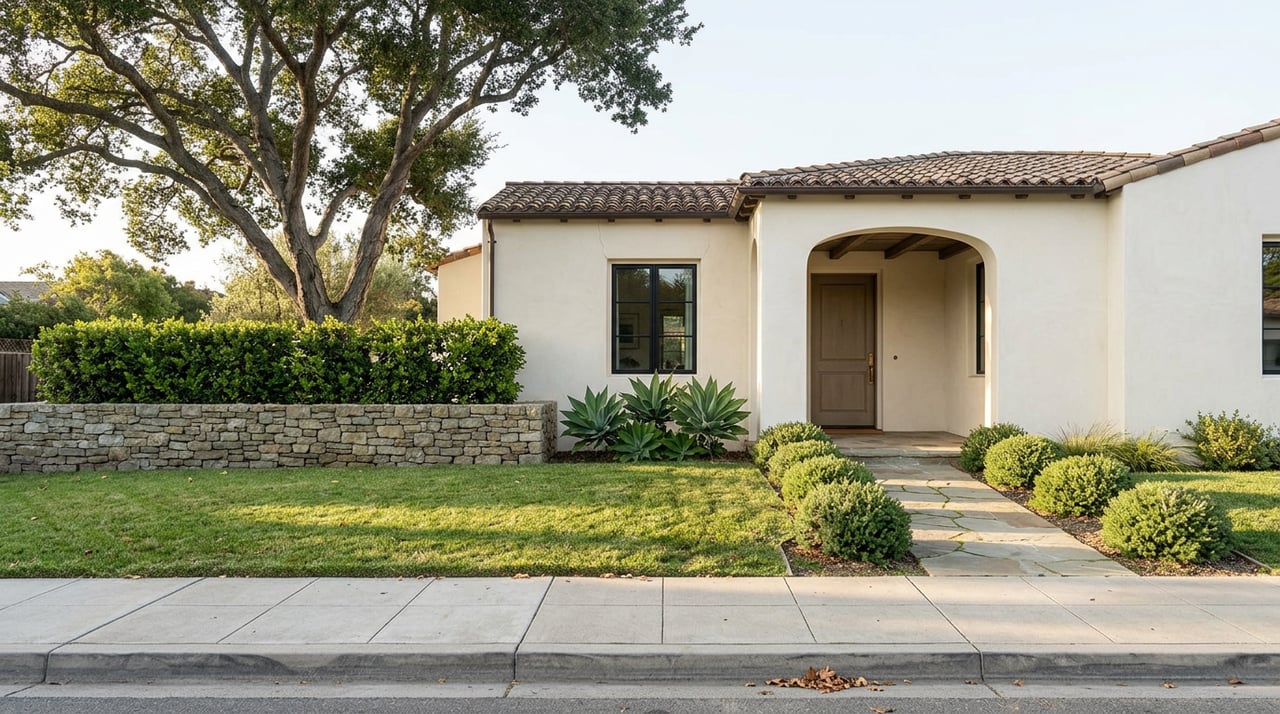
Walk down Camino de la Costa before eight on a summer morning and you will notice something before you can name it. There are no driveways breaking up the sidewalk. No garage doors interrupting the sightline between one Mediterranean facade and the next. No cars nosing out of carports to check for traffic. The street just runs, palm to palm, all the way to where it bends toward the water.
That is not an accident of good manners. It is a decision someone made in the 1920s, and it is the reason Lower Hermosa still functions as one of the more walkable pockets of La Jolla despite having no commercial strip, no clubhouse, and technically no homeowners association at all.
Most of Lower Hermosa's roughly 260 homes were built with garages accessed from rear service alleys rather than the front street. That single choice, made before most of the houses on Camino de la Costa had been poured, is why the street reads as continuous rather than segmented. There is no curb cut every forty feet, no need to check for a reversing car at every third lot. The alley absorbed all the utilitarian traffic a driveway would normally dump onto the sidewalk, and it left the street itself for people on foot.
It is a small piece of infrastructure that most residents have walked past thousands of times without registering why the block feels different from a typical suburban grid. But it is the reason a stroll here has a different rhythm than one in a neighborhood where every third house forces you around a parked car or a delivery truck backing out.
Lower Hermosa has no restaurants, no cafes, no retail of any kind inside its own boundaries. It also has no homeowners association governing paint colors or landscaping, which is unusual for a neighborhood this manicured and this expensive. The result is a district that reads as purely residential in the literal sense: every lot exists to be a home, not a storefront, not a mixed-use parcel, not an amenity for someone else's development.
That absence is deliberate rather than accidental. The neighborhood sits bounded by Windansea Beach to the north and Bird Rock to the south, which means the commercial life residents actually use is a short walk away rather than built into the neighborhood itself. You do not get a coffee on Camino de la Costa. You get it by walking out.
This is where the alley decision and the no-commerce decision start to reinforce each other. Because there is no single beach access point or town square pulling foot traffic to one spot, the neighborhood's actual geography works more like a chain of small stops than one big destination. Most residents end up moving through some version of this sequence on a given walk:
None of these are large. None of them are the kind of single iconic beach that shows up on a postcard. But strung together, they turn a fifteen-minute loop into something closer to a tour of five distinct coastal moods, from reef break to tide pool to sand, without ever leaving walking distance of your own front door.
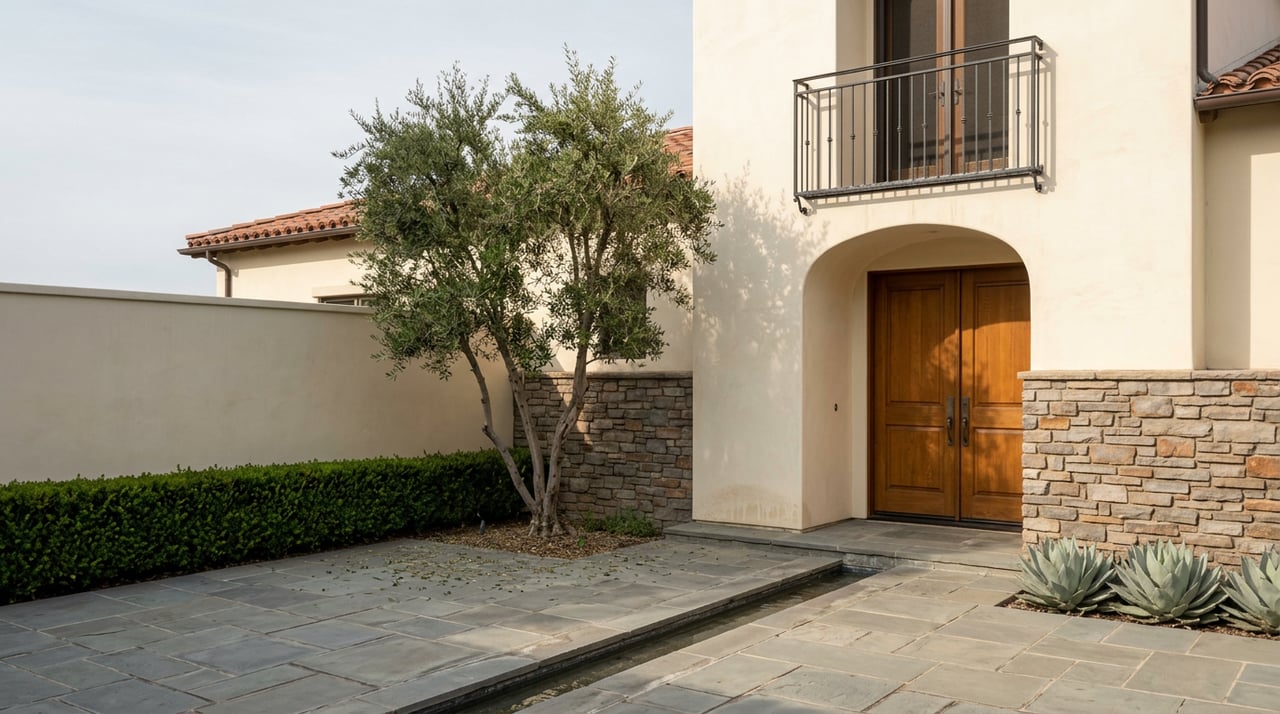
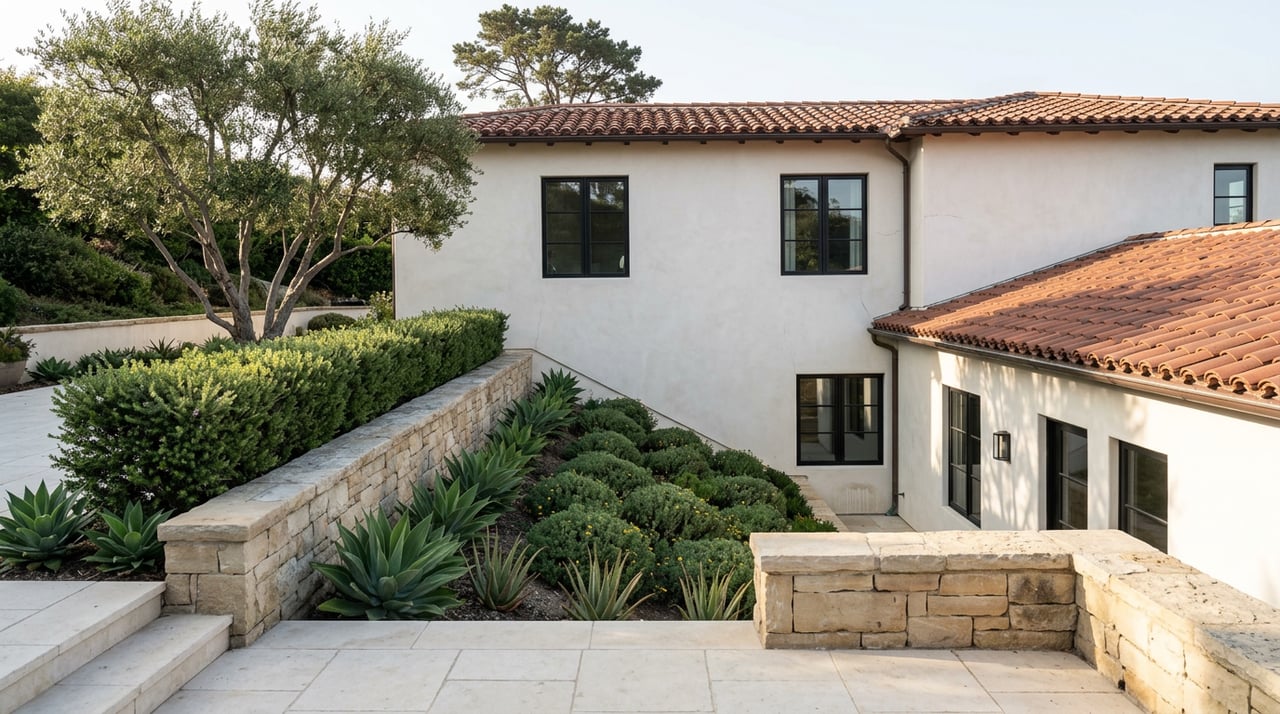
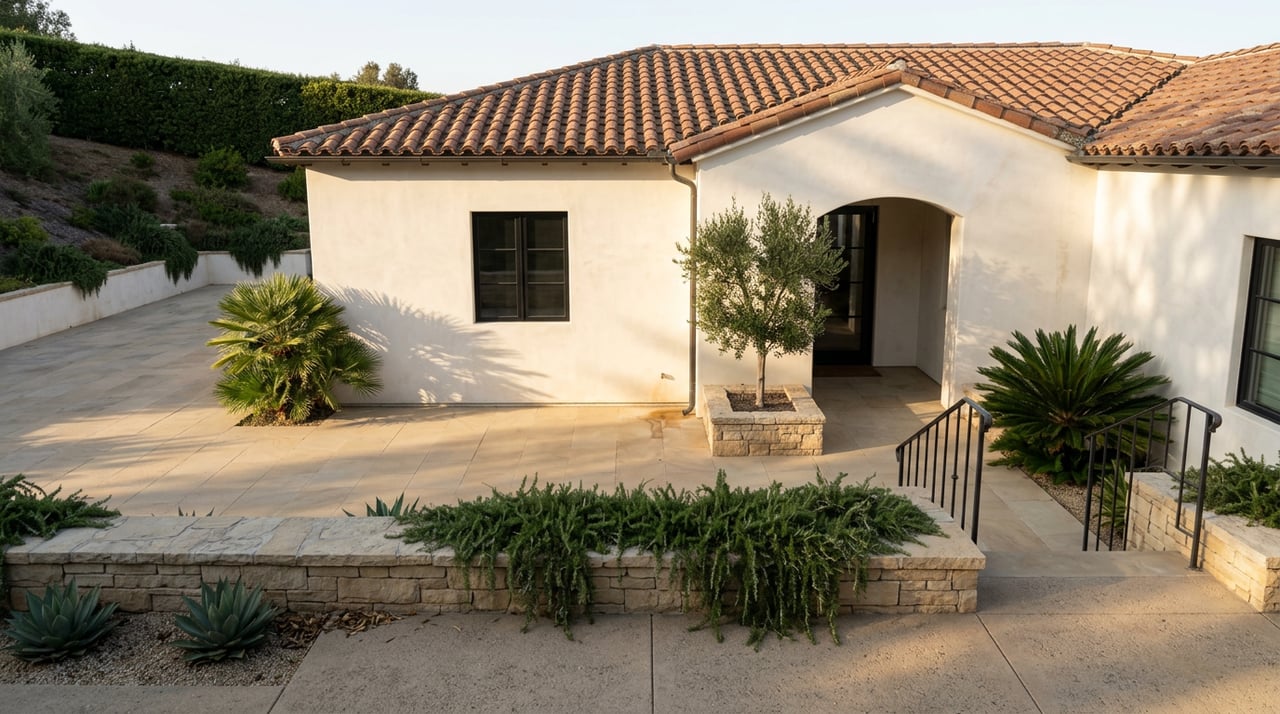
The architectural mix along Camino de la Costa tells a version of the same story. A number of the neighborhood's original 1920s villas trace back to Herbert Mann and Thomas Shepherd, the same architects behind La Valencia Hotel in the Village. Alongside those Mediterranean and Spanish Revival originals sit French Normandy-style homes from the following decade, minimalist builds from the 1950s through the 1980s, and a steady run of full-scale 21st-century rebuilds on the same footprints.
That layering only really registers at walking pace. From a car, the facades blur into a general impression of old money and palm trees. On foot, the differences show up in the details: an arched entry here, a mansard roofline there, a new build that keeps the bones of an old lot but swaps the material palette entirely. It is a streetscape designed to reward the person moving slowly enough to actually look.
A neighborhood with no storefronts still has a main street. It's just the sidewalk.
Because Lower Hermosa keeps no commercial space for itself, the walk's natural terminus sits just across the boundary in Bird Rock, where Bird Rock Coffee Roasters and a handful of small cafes give the morning loop somewhere to land. It is close enough that the walk out and back rarely breaks thirty minutes, which is likely why so many residents treat it as a daily habit rather than a weekend activity.
The pattern holds for dog walkers, too. Nextdoor threads from the neighborhood consistently point to the same short list of shared interests: dogs, gardening, walking, hiking, and the kind of low-key local questions that only come from people who are outside often enough to run into each other. That is not the profile of a neighborhood people drive through. It is the profile of one they move through on foot, repeatedly, because the physical layout makes that the path of least resistance.
None of this changes the price of a home in Lower Hermosa or the view from the primary bedroom. But it does explain something residents often feel without being able to point to the cause. The reason this stretch of coastline feels calmer and more continuous than plenty of comparably priced streets elsewhere in La Jolla is not just the ocean proximity. It is a hundred-year-old infrastructure decision that took the driveways off the street and left the sidewalk uninterrupted, paired with a boundary line drawn deliberately to keep commerce a short walk away rather than underfoot.
If you are already walking that loop most mornings, you already know the feeling. Now you know why it exists.
For those thinking about what a home like this is actually worth, from the walkability built into the street design to the layered architectural history along it, the Nelson Brother Team knows this stretch of coastline block by block. Let's Connect.


We are Drew and Tim Nelson of the Nelson Brothers Team at Willis Allen Real Estate. Having closed on over $1B+ of sales volume, and over $114M in 2022, we are one of the top producing teams specializing in coastal luxury real estate and investment
property in La Jolla - where we were born, raised and currently reside with our families. We both went to the University of Southern California, where Drew earned a BA in Finance and Business Economics with a concentration in Real Estate, and Tim
completed the Marshall School of Business Entrepreneurship Program. The combination of our collective experience, knowledge, and resources allows us to offer our clients more. More expertise. More responsiveness. More ideas. More solutions.
More success. More of what you deserve from your real estate agent!
Stay up to date on the latest real estate trends.
October 1, 2026
September 29, 2026
Small Missteps That Can Cost You Time and Money.
September 29, 2026
A Deep Dive into What Happens After Your Home Goes Live.
September 24, 2026
September 17, 2026
September 10, 2026
September 3, 2026
August 27, 2026
August 20, 2026
The combination of our collective experience, knowledge, and resources allows us to offer our clients more. More expertise. More responsiveness. More options. More ideas. More solutions. More success. More of what you deserve from your real estate agent!